B. Chemiosmosis: The Energy-Coupling Mechanism
The mechanism for coupling exergonic electron flow from the oxidation of food to the endergonic process of oxidative phosphorylation is chemiosmosis.
Chemiosmosis = The coupling of exergonic electron flow down an electron transport chain to endergonic ATP production by the creation of a proton gradient across a membrane. The proton gradient drives ATP synthesis as protons diffuse back across the membrane.
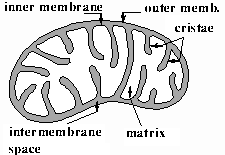
The site of oxidative phosphorylation is the inner mitochondrial membrane, which has many copies of a protein complex, ATP synthase. This complex:
Cristae or infoldings of the inner mitochondrial membrane, increase the surface area available for chemiosmosis to occur.
Membrane structure correlates with the prominent functional role membranes play in chemiosmosis:
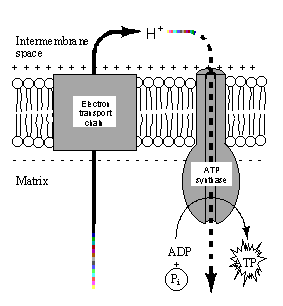
How does the electron transport chain pump hydrogen ions from the matrix to the intermembrane space? The process is based on spatial organization of the electron transport chain in the membrane. Note that:
Most of the electron carriers are organized into three complexes: 1) NADH dehydrogenase complex; 2) cytochrome b-c1 complex; and 3) cytochrome oxidase complex. (See Text)
Mobile carriers transfer electrons between complexes. These mobile carriers are:
1. Ubiquinone (Q). Near the matrix, Q accepts electrons from the NADH dehydrogenase complex, diffuses across the lipid bilayer, and passes electrons to the cytochrome b-c1 complex.
2. Cytochrome c (Cyt c). Cyt c accepts electrons from the cytochrome b-c1 complex and conveys them to the cytochrome oxidase complex.
When the transport chain is operating:
The H+ gradient that results is called a proton-motive force to emphasize that the gradient represents potential energy.
Proton motive force = Potential energy stored in the proton gradient created across biological membranes that are involved in chemiosmosis.
1. Concentration gradient of protons (chemical gradient).
2. Voltage across the membrane because of a higher concentration of positively charged protons on one side (electrical gradient).
Chemiosmosis couples exergonic chemical reactions to endergonic H+ transport, which creates the proton-motive force used to drive cellular work, such as: